
Wireless M-Bus Modules
For Smart Metering
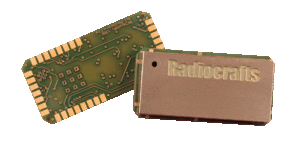

Reliable, low-power wireless connectivity for smart water, gas, heat, and electricity meters
Build your next smart meter and/or gateway with proven Wireless M-Bus connectivity. Radiocrafts provides ready-to-integrate Wireless M-Bus modules with support for multiple frequency bands, operating modes, and OMS-compatible communication, helping you reduce development time and bring reliable smart metering products to market faster.
Enable decades of reliable, maintenance-free wireless metering.

Ultra-Low Power
Optimized for battery-operated meters and long product lifetimes

Purpose-Built For Metering
A proven standardized wireless technology developed specifically for meter communication

Reliable RF Performance
Sub-GHz communication provides excellent range and penetration in demanding environments (ex: meters located in basements or steel enclosures)

Secure communication
Support for AES-128 encryption and authentication

Flexible Deployment
Multiple Wireless M-Bus modes (S, T, C, N) and frequency bands (169, 433, 865, 868 MHz) supported for different applications and regions

OMS Compatibility
Support for interoperable smart metering systems based on the Open Metering System specification
One Technology. Multiple Smart Metering Applications.
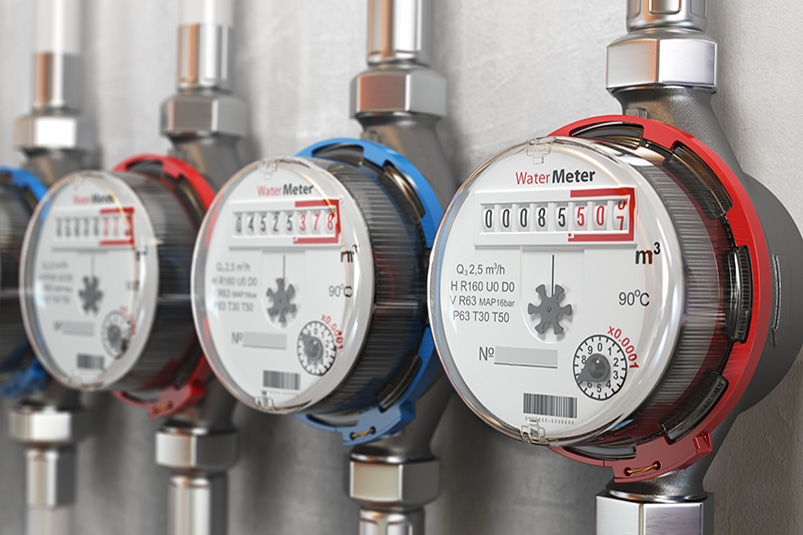
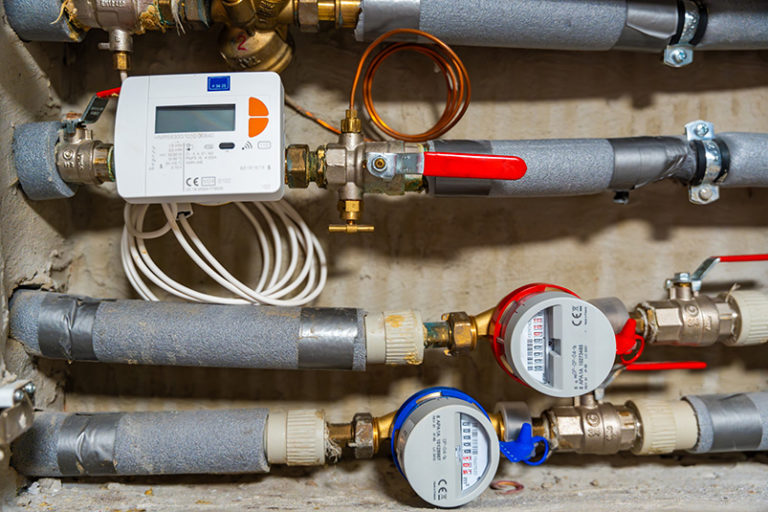
Water meters
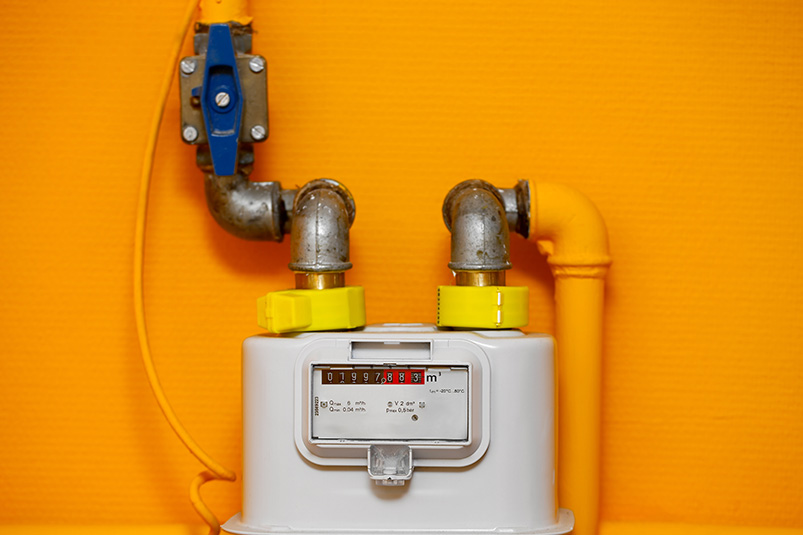
Gas meters
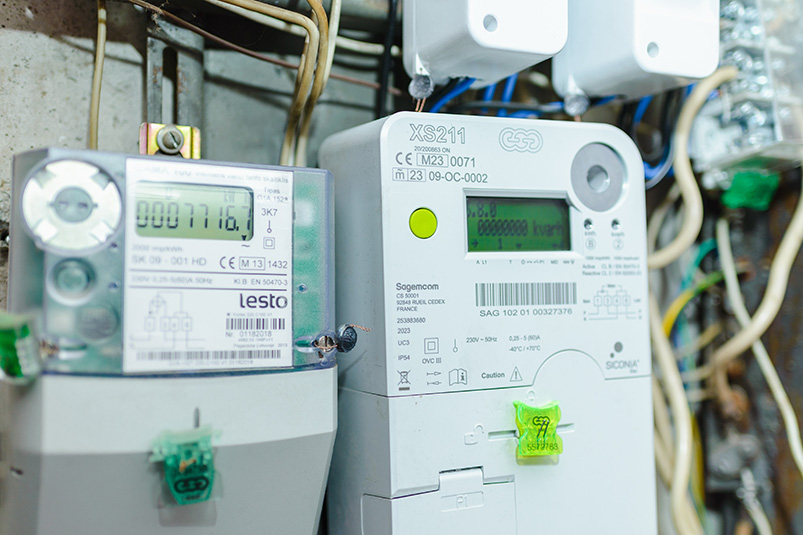
Electricity meters
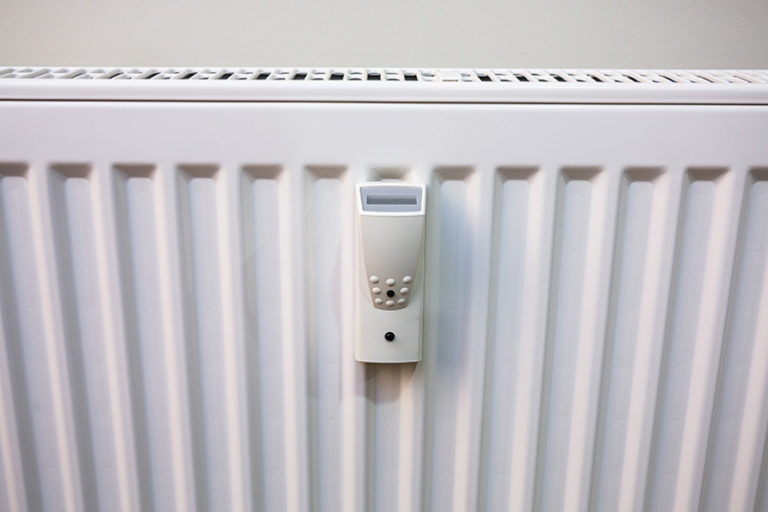
Heat cost allocators
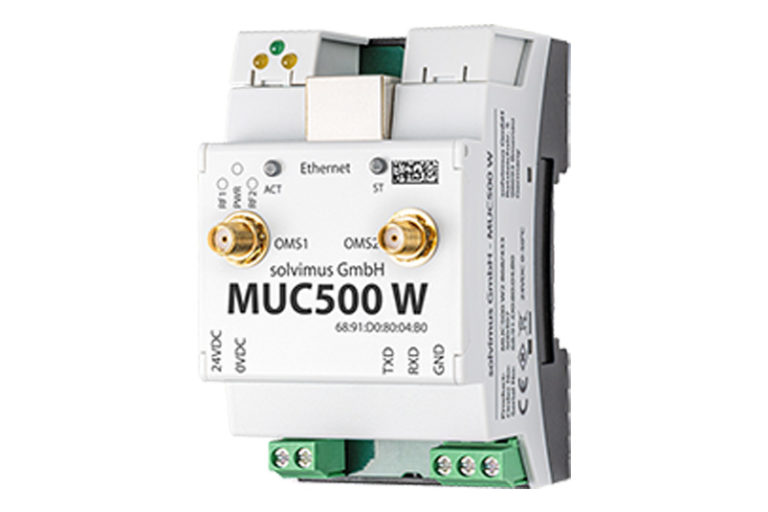
Data concentrators
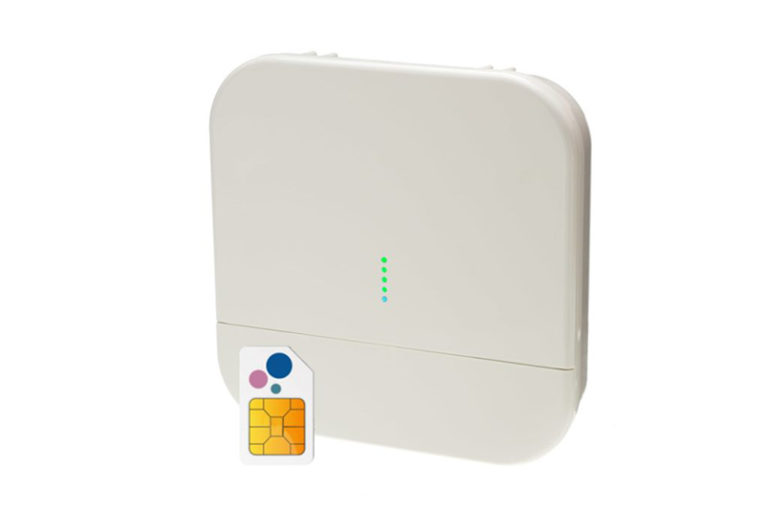
Smart Meter Gateways (SMGW)
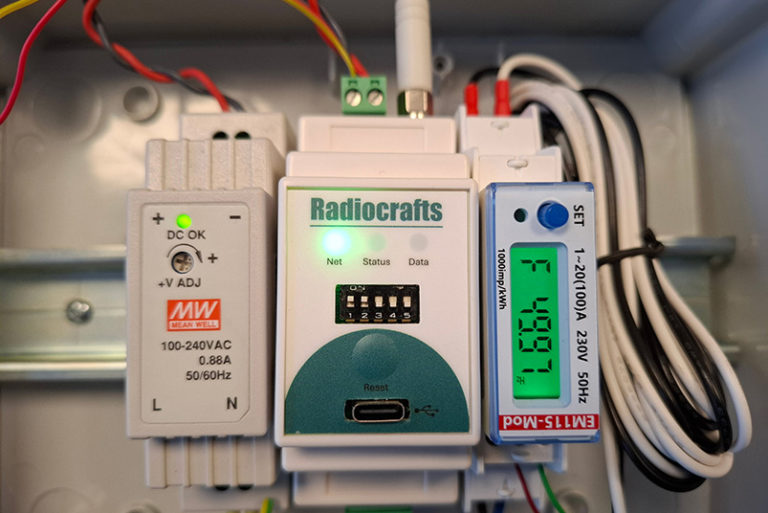
Sub-meters
Pressure sensors
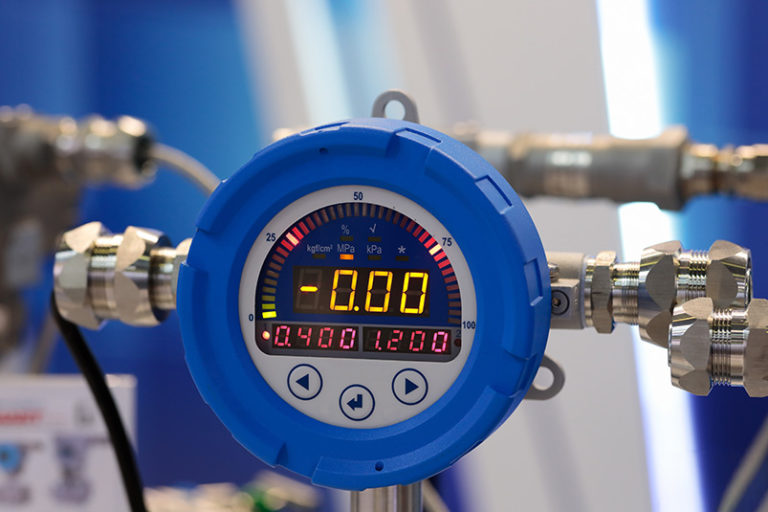
Automatic Meter Reading (AMR) Devices
Find The Right Wireless M-Bus Module
Module Family | Positioning | Best Suited For |
RC11xx-MBUS3 | Standard OMS compliant Wireless M-Bus connectivity | General-purpose smart meters requiring established Wireless M-Bus / OMS connectivity at 433, 865, or 868 MHz. Supports S1, S2, T1, T2, and C1 modes. |
RC17xx-MBUS4 | Long-range 169 MHz Wireless M-Bus | Hard-to-reach meters requiring excellent object penetration, noise resilience, and very long range. Supports Wireless M-Bus modes N1 and N2. The RC1701HP-MBUS4 module supports up to 20 km line-of-sight range. |
MBUS5 | Next-generation Wireless M-Bus | New smart meter designs or upgrades where improved Wireless M-Bus performance, security, and power efficiency, are priorities. |
MPC1 | Wireless M-Bus + pulse counting | Adding Wireless M-Bus to water, gas, electricity, and heat meters with pulse outputs. It autonomously counts pulses and schedules transmissions without requiring an external MCU for that function. |
MSM | Wireless M-Bus + sensor interface | Sub-metering smart sensors and monitoring applications requiring direct sensor interfaces. Supports Analog, GPIO, I2C, and SPI interfaces without needing an external MCU to read the sensors. |
Wize | Long-range 169 MHz LPWAN | Large-scale water and gas metering and other devices in basements, underground or similarly difficult locations. Wize is based on Wireless M-Bus Mode N at 169 MHz but uses the Wize protocol. |
RC1702HP | Customizable module platform | Projects with specific and niche requirements where a standard module is not suitable. |
How Wireless M-Bus works in a Smart Metering Network
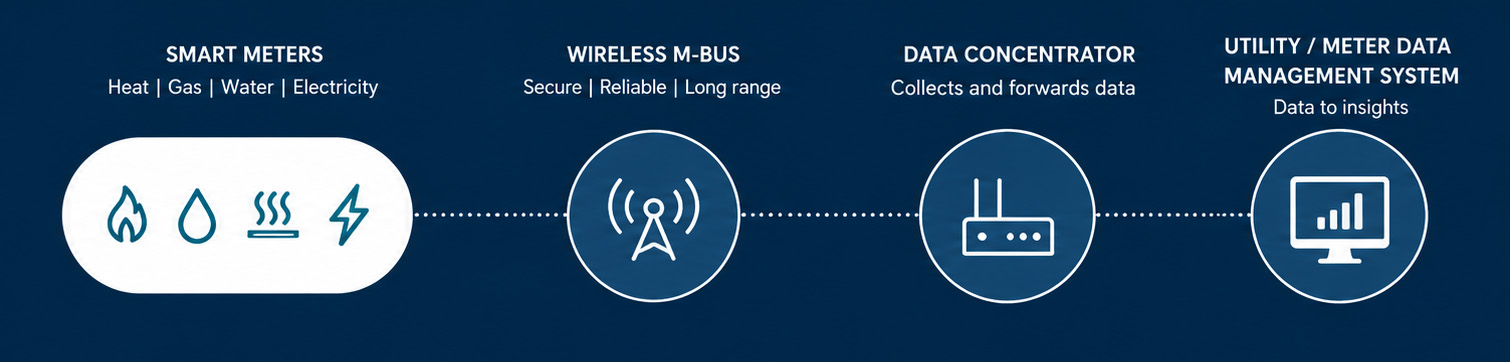
A typical Wireless M-Bus smart metering network consists of smart meters, a Wireless M-Bus communication link and a gateway or data collector.
The meter periodically transmits consumption and status information over Wireless M-Bus. A gateway forwards the data to the utility’s system.

Wireless M-Bus technology overview
Learn more about the Wireless M-Bus protocol, modes and their uses, data rates, protocol stacks, and dialects for specific requirements

Wireless M-Bus and OMS
Learn more about how Wireless M-Bus has support for OMS-based interoperable smart metering ecosystems.

Wize and the Wize Alliance
Learn more about the Wize technology, based on Wireless M-Bus mode N, and the impressive range and penetration properties of the 169 MHz frequency band
Ready to Add Wireless M-Bus To Your Smart Meters?
Whether you are developing a new smart meter, replacing a legacy radio design, or upgrading an existing product, our engineers can help you select and integrate the right Wireless M-Bus solution.


Get support from Radiocrafts experts from evaluation all the way to production

Wireless M-Bus For Smart Metering FAQ
What is Wireless M-Bus and why is it used for Smart Metering?
Wireless M-Bus is a standardized wireless communication protocol specifically designed for remote meter reading. Based on the EN 13757 standard, it provides reliable, low-power, and secure communication for electricity, gas, water, heat meters, and heat cost allocators. It is particularly well suited for battery-powered meters that need to operate reliably for many years.
What types of smart meters can Radiocrafts Wireless M-Bus modules be used with?
Radiocrafts’ Wireless M-Bus modules for Smart Metering can be integrated into a wide range of utility meters, including water, gas, electricity and heat meters, as well as heat cost allocators.
Different module variants are available depending on the meter interface, frequency, communication requirements, and target market.
Why should I use a Radiocrafts Wireless M-Bus module instead of designing the RF solution myself?
Radiocrafts modules integrate the radio hardware and Wireless M-Bus protocol functionality into a ready-to-integrate solution. This significantly reduces RF development, protocol implementation, testing, and certification effort, helping manufacturers lower development risk and bring new smart metering products to market faster.
Which Wireless M-Bus frequency bands does Radiocrafts support?
Radiocrafts offers Wireless M-Bus modules for Smart Metering solutions across multiple sub-GHz frequency bands, including 169, 433, 865, 868, 915 and 923 MHz, depending on the module family and target region.
This allows manufacturers to select a solution suited to regional regulations and application requirements.
Which Wireless M-Bus modes do Radiocrafts modules support?
Radiocrafts’ portfolio supports major Wireless M-Bus operating modes including S, T, C and N modes, with support depending on the selected module family.
This enables solutions ranging from conventional 868 MHz smart metering to narrowband 169 MHz applications requiring greater range and penetration.
Can Wireless M-Bus reach meters installed in basements, meter cabinets, or other hard-to-reach locations?
Yes.
Sub-GHz communication provides better penetration than higher-frequency wireless technologies, making Wireless M-Bus suitable for many indoor and difficult metering installations.
For particularly challenging locations such as deep basements, pits, or underground water meters, Radiocrafts also offers 169 MHz Wireless M-Bus/Wize solutions, designed for long range and strong penetration.
How do I connect a Radiocrafts Wireless M-Bus module to my meter?
Radiocrafts’ standard Wireless M-Bus modules provide a UART interface for communication and configuration, simplifying integration with the meter’s host controller.
Radiocrafts also offers application-specific module families, including MPC pulse-counter modules and MSM sensor-interfacing modules, for applications where additional functionality can be handled directly by the RF module.
What is the difference between Radiocrafts' standard MBUS, MPC and MSM module families?
The standard MBUS modules provide an embedded Wireless M-Bus stack for integration into smart meters and data collectors.
MPC modules add autonomous pulse counting and scheduled transmission functionality, making them suitable for meters with pulse outputs.
MSM modules include intelligent sensor-interfacing functionality and can read and report sensors without requiring an additional external microcontroller for those tasks.
Are Radiocrafts Wireless M-Bus modules pre-certified?
Radiocrafts offers CE pre-certified Wireless M-Bus modules for applicable European frequency bands, helping reduce the certification work required when developing a finished smart meter.
Regional compliance varies by module, so manufacturers should select the appropriate module according to the frequency band and target market.