
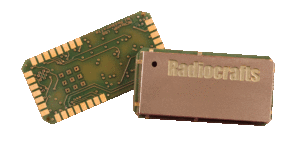

Wireless M-Bus is a robust, power-efficient, and secure standardized protocol for wireless meter reading (Smart Metering). In particular, it offers ultra-low power capabilities for battery operation and a high level of security optimized to meet smart metering market requirements and other industrial applications as well.

Proven industry standard

Ultra low power for battery operation

Long range including in hard-to-reach locations

Advanced security
How it works
Using a Wireless M-Bus RF module from Radiocrafts ensures market acceptance with proven quality and standards compliance. It is reliable and secure, reduces R&D investment, and speeds time to market for smart metering solutions. In addition, an RF module from Radiocrafts is always compatible with the latest additions to the Wireless M-Bus standard. We actively participate in the standardization process for Wireless M-Bus through CEN, OMS Group, and the Wize Alliance.
Wireless M-Bus is the only European standard for wireless meter reading (EN 13757). The standard was originally developed for communication with battery operated gas, water and heat meters, operating at 868 MHz with a focus on low power consumption and low implementation cost. Later, the standard was updated and expanded to include narrowband radio, security (encryption and authentication), and repeater networks. Moreover, it supports all types of utility meters as well as environmental sensors. Wireless M-Bus is the basis for OMS (Open Metering System) and other national standards (France, Italy, Netherlands) for meter reading.
With that in mind, one of the key considerations for Wireless M-Bus is battery operated meters. Gas and water meters are normally not connected to mains power and therefore have limited energy available. In addition, replacing meters requires significant maintenance and labor costs.
Therefore, meters must have long-lasting batteries with lifetimes of at least 10–20 years.
Wireless M-Bus module benefits and features:
- Full feature Wireless M-Bus stack embedded in the module
- Flexibility to choose between different frequencies: 169, 433, 865, 868, 915, 923 MHz
- Flexibility to choose between different modes: C, R,S, T, N modes
- UART interface for easy communication and configuration
- Concentrator (Master) can support up to 256 meters (slaves)
- High reliable with auto-message generator
- High levels of security with AES-128 hardware encryption
- Designed for Open Meater Reading (OMS) specification
- Special support for Dutch Smart Meter Requirements (NTA8130/DSMR/SMR)
- Special support for Italian Smart Meter Requirements (CIG)
- Built-in pulse counter and automatically scheduled transmissions (MPC module variant)
- Ultra low power modes for long battery lifetime > 15 years
- High power option for longer range (27 dBm)
- Compact shielded module 12.7 x 25.4 x 3.3 mm for SMD mounting
- CE pre-certified modules for fast to market release
Radiocrafts offers an extensive portfolio of Wireless M-Bus modules for smart metering and industrial applications. They ensure standard compliance, flexible modes and frequency bands, and proven quality. They also reduce R&D effort and accelerate time to market.
RC11xx-MBUS3 module series
Cost-effective OMS-compliant modules used by several utility companies for Smart Metering applications
Module | Frequency Band (MHz) | Radio Channels # | Data Rate (kbps) | Rx Sensitivity (mA) | Rx Current (mA) | Power Output (dBm) | Tx Current (mA) | Sleep Current (uA) | Indicative LoS (M) | Region / Compliance |
RC1140-MBUS3 | 433 | 12 | 4.8 / 32 / 100 | -106 / -102 / -101 | 24 | 10 | 37 | 0.3 | 1,000 | OMS / Non-EU |
RC1160-MBUS3 | 868 | 1 | 32 / 100 | -102 / -101 | 24 | 10 | 37 | 0.3 | 500 | OMS / Russia |
RC1170-MBUS3 | 865 | 12 | 4.8 / 32 / 100 | -106 / -102 / -101 | 24 | 10 | 37 | 0.3 | 500 | OMS / India |
RC1180-MBUS3 | 868 | 12 | 4.8 / 32 / 100 | -106 / -102 / -101 | 24 | 10 | 37 | 0.3 | 500 | OMS / EU / CE |
RC17xx-MBUS4 module series
An upgraded version of the RC11xx-MBUS3 series with ultra-narrowband radio for better noise resilience and high power for longer range
Module | Frequency Band (MHz) | Radio Channels # | Data Rate (kbps) | Rx Sensitivity (mA) | Rx Current (mA) | Power Output (dBm) | Tx Current (mA) | Sleep Current (uA) | Indicative LoS (M) | Region / Compliance |
RC1701HP-MBUS4 | 169 | 41 | 2.4 / 4.8 / 19.2 | -119 / -115 / -107 | 31 | 27 | 403 | 0.6 | 20,000 | EU / CE |
RC18x3-MBUS5 module series
An upgraded version of the RC11xx-MBUS3 series designed to deliver improved performance, enhanced security, and exceptional power efficiency for modern metering applications.
Module | Frequency Band (MHz) | Radio Channels # | Data Rate (kbps) | Rx Sensitivity (mA) | Rx Current (mA) | Power Output (dBm) | Tx Current (mA) | Sleep Current (uA) | Indicative LoS (M) | Region / Compliance |
RC1843-MBUS5 | 433 | 2 | 32.768 / 100 / 100 | -111 / -106 / -105 | 8.2 | 14 | 26 | 0.7 | 1,500 | OMS / Non-EU |
RC1883-MBUS5 | 868 | 2 | 32.768 / 100 / 100 | -111 / -106 / -105 | 8.2 | 14 | 25.8 | 0.7 | 1,000 | OMS / EU / CE |
Wize module series
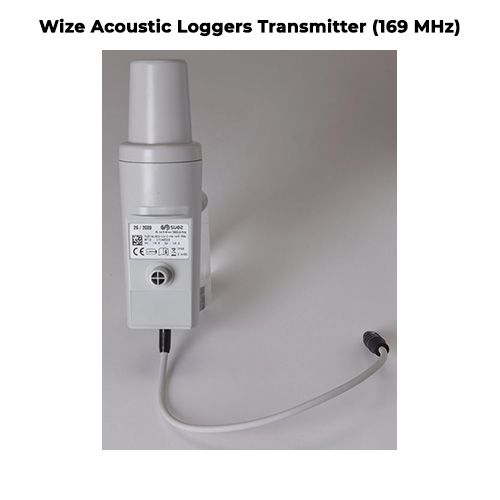
Wize is a 169 MHz technology designed to achieve long range, great object penetration, and long battery life. Specifically, it is based on Wireless M-Bus mode N and was for installations which require integration in a constrained environment: metering, public lighting, energy management of buildings, smart mobility, etc.
Module | Frequency Band (MHz) | Radio Channels # | Data Rate (kbps) | Rx Sensitivity (mA) | Rx Current (mA) | Power Output (dBm) | Tx Current (mA) | Sleep Current (uA) | Indicative LoS (M) | Region / Compliance |
RC1701HP-WIZE | 169 | 6 | 2.4 / 4.8 / 6.4 | -119 / -115 / -107 | 31 | 27 | 403 | 0.6 | 20,000 | EU / CE |
RC1xxx-MPC1 module series
Stand-alone Wireless M-Bus module with Pulse counter, Tamper and Install inputs.
Module | Frequency Band (MHz) | Radio Channels # | Data Rate (kbps) | Rx Sensitivity (mA) | Rx Current (mA) | Power Output (dBm) | Tx Current (mA) | Sleep Current (uA) | Indicative LoS (M) | Region / Compliance |
RC1140-MPC1 | 433 | 12 | 4.8 / 32 / 100 | -106 / -102 / -101 | 24 | 10 | 37 | 0.3 | 1,000 | Non-EU |
RC1160-MPC1 | 868 | 1 | 32 / 100 | -102 / -101 | 24 | 10 | 37 | 0.3 | 500 | Russia |
RC1170-MPC1 | 865 | 12 | 4.8 / 32 / 100 | -106 / -102 / -101 | 24 | 10 | 37 | 0.3 | 500 | India |
RC1180-MPC1 | 868 | 12 | 4.8 / 32 / 100 | -106 / -102 / -101 | 24 | 10 | 37 | 0.3 | 500 | OMS / EU / CE |
RC1701HP-MPC1 | 169 | 41 | 2.4 / 4.8 / 19.2 | -119 / -115 / -107 | 31 | 27 | 403 | 0.6 | 20,000 | EU / CE |
RC1xxx-MSM module series
The Sensor Interface Modules from Radiocrafts are fully integrated modules that include an intelligent sensor interface. It supports physical and logical interface to many of the most popular sensors and actuators, such as Accelerometer, Temperature, Humidity, Flow, Voltage, and others. Configurable signal processing is also available.
Module | Frequency Band (MHz) | Radio Channels # | Data Rate (kbps) | Rx Sensitivity (mA) | Rx Current (mA) | Power Output (dBm) | Tx Current (mA) | Sleep Current (uA) | Indicative LoS (M) | Region / Compliance |
RC1180-MSM | 868 | 12 | 4.8 / 32 / 100 | -106 / -102 / -101 | 24 | 10 | 37 | 0.3 | 500 | EU / CE |
RC1701HP-MSM | 169 | 10 | 2.4 / 4.8 / 19.2 | -119 / -115 / -107 | 31 | 27 | 403 | 0.6 | 20,000 | EU / CE |
Datasheets
File type: |
File name: |
File description: |
|---|---|---|
 |
This document covers the relevant information for the RC1701HP-WIZE module, such as product features, reference data, circuit and pin description, module configuration, power supply, programming interface, antenna connection and other product related information. |
|
|
This document is a short form version of the data sheet of the MPC1 wireless modules with Pulse Counter inputs. It includes the preliminary information of the product, such as features, specifications, pin description and assignment. Products: RC1140-MPC1, RC1160-MPC1, RC1170-MPC1, RC1180-MPC1, and RC1701HP-MPC1. |
|
|
This document covers the relevant information about the RC11X0-MBUS module series, such as product features, reference data, circuit and pin description, MCU considerations, power supply, programming interface, antenna connection ant other product related information. Products: RC1140-MBUS3, RC1160-MBUS3, and RC1170-MBUS3. |
|
|
This document covers the relevant information about the RC1180-MBUS3 module, such as product features, reference data, circuit and pin description, MCU considerations, power supply, programming interface, antenna connection ant other product related information. |
|
|
This document covers the relevant information on the RC1180HP-MBUS3 module, such as product features, reference data, circuit and pin description, module configuration, power supply, programming interface, antenna connection and other product related information. |
|
|
This document covers the relevant information about the RC1180-MSM module, such as product features, reference data, circuit and pin description, MCU considerations, power supply, programming interface, antenna connection ant other product related information. |
|
|
This document covers the relevant information about the RC1701HP-MBUS4 module series, such as product features, reference data, circuit and pin description, MCU considerations, power supply, programming interface, antenna connection ant other product related information. |
|
|
This document covers the relevant information about the RC1701HP-MSM module series, such as product features, reference data, circuit and pin description, MCU considerations, power supply, programming interface, antenna connection ant other product related information. |
|
|
This document covers the relevant information about the RC18x3-MBUS5 module series, such as product features, reference data, circuit and pin description, MCU considerations, power supply, programming interface, antenna connection ant other product related information. |
User Manuals
File type: |
File name: |
File description: |
|---|---|---|
 |
User Manual for WIZE modules is a step by step introduction how to use our module with the WIZE Protocol. The document describes the WIZE feature sets, basic functionality, timing, power management, installation and binding, 2-way communication, and more. |
|
|
User Manual for Wireless M-Bus modules is a step by step introduction how to use our module with the MBUS protocol. The document describes the MBUS feature sets, Wireless M-BUS embedded protocol, the UART interface and timing, power management and supply voltage. The document also includes the descriptions of the MBUS1, MBUS2, MBUS3 and MBUS4 protocols. |
|
|
User Manual for The MPC1 Wireless M-Bus module with the pulse counter inputs, which is based on the MBUS3/MBUS4 protocol. The document describes the pulse input, installation, over the air configuration, pin assignment and description, configuration memory and quick demo. |
|
|
User Manual for Wireless M-Bus Sensor Modules modules is a step by step introduction how to use our module with the MBUS protocol. The document describes the MBUS feature sets, Wireless M-BUS embedded protocol, the UART interface and timing, power management and supply voltage. The document also includes the descriptions of the MBUS1, MBUS2, MBUS3 and MBUS4 protocols. |
|
|
The User Manual for the MBUS5 modules is a step by step introduction on how to use our modules with the MBUS5 firmware. The document describes the MBUS5 module feature sets, basic module functionalities, an overview of the device database, security modes, sleep (low power) modes, auto messaging functions, and bootloader and firmware updates. |
|
|
This document is a migration guide for customers who want to swap from using the RC11x0-MBUS3 modules to the RC18x3-MBUS5 modules. The modules can be replaced without board redesign. However, there are some minor differences the customer must be aware of. Those differences are explained in this document. |
Application Notes
File type: |
File name: |
File description: |
|---|---|---|
|
When designing the PCB layout for the RF modules, there are some measures that need to be taken to get the best performance from the radio module. In this application note, we will suggest some best practices for your product to succeed. |
|
|
The reason why Radiocrafts has managed to maintain its status as a world leading Wireless M-Bus solutions provider lies in its versatile and adaptive Wireless M-Bus solutions that cater to most of the common use cases of Wireless M-Bus. Radiocrafts Wireless M-Bus offerings extend through a wide selection of modules supporting the most commonly used Wireless M-Bus modes, such as MBUS3, MBUS4, and WIZE modules. Radiocrafts modules also operate in most frequency ranges such as the 169 MHz, 433 MHz, 865 MHz, and the 868 MHz ranges. We also customization of modules. |
|
|
Different applications and different use-cases will need different wireless connectivity technologies. Therefore, selecting the right wireless technology is a critical design decision. Based on radio performance requirements and other criteria, this selection guide will point out the differences between the technologies to help in selecting the right one for your project. |
|
|
This is a short Application Note on the use of license free RF modules in New Zealand, and in particular which modules from Radiocrafts will meet the local radio regulations. |
|
|
Utility metering systems handle billing information for high value commodities making it a critical part of the infrastructure. The security of such systems is of the highest importance. The integrity of data transfer, in the case of meter communication (and switch or valve control) may also be a safety issue. It used to be a matter of tamper protection, but with the use of automatic and remote meter reading (smart metering), the focus is on communication security. |
|
|
The Wireless M-Bus standard (actually a European Norm, EN 13757-4) is a wireless communication protocol that was developed for the reading of electricity, gas-, water-, heat-meters and heat allocators. It has gradually been extended as new frequency bands and technologies have become available. The mode N (“Narrowband”) was added when the 169 MHz band was opened for license free use for utility meter reading. A new major addition and revision of the EN 13757-4 standard related to mode N was done in the 2019 release. This Application Note gives an overview of the M-Bus standard documents and summarizes the main changes in this new release of part -4. |
|
|
There are many different wireless standards and technologies available to enable the internet of things (IoT). The different technologies have different pro’s and con’s depending on the use case and the end customer. Trying to keep up with the latest wireless trends can drain a company of all its resources and take attention from its core business. The solution recommended by Radiocrafts is to use a modular approach and a common RF module footprint that enables all the technologies offered by Radiocrafts without modifications to the PCB. |
|
|
Making a good RF antenna is by some considered a challenging part of a wireless product design. It required RF knowledge which is not common among general electrical design engineer and not widespread know-how among software engineers either. Radiocrafts has developed a process and the tools required to make this tuning process simple and straightforward in a way that a person with no RF experience can tune a 169MHz antenna to the final product. |
|
|
Wireless M-Bus (EN 13757-4:2013) is a wireless communication standard that was developed for the reading of electricity, gas-, water-, heat-meters and heat allocators. However, the reading of utility meters is very similar to applications in the industry where sensors or actuators need to be read or operated at a distance. All the issues have already been addressed in the development of the Wireless M-Bus standard. |
|
|
When selecting the right radio technology, the achievable communication range is an important factor. This document reviews how to analyse radio range based on parameters provided in the datasheets for the different module families. Some measurements result from practical range testing. |
|
|
The purpose of this document is to list some of the most common issues that customers report when using Radiocrafts modules, and the solution to these issues. |
|
|
The Italian “CIG Interchangeability Task Force” has published UNI/TS 11291-11-4, Gas measurement systems – Hourly based gas metering systems, Part 11-4, Communication profile PM1. This application note points out how the RC1701HP-MBUS4 module can be used to meet the requirements of this companion standard. |
|
|
Radiocrafts offers a wide range of wireless modules targeting different solutions wordwide. This Application Note informs you on how to select and use Radiocrafts modules for FCC compliance in US. |
|
|
This Application Note describes how the Wireless M-Bus modules (MBUS3, MBUS4) from Radiocrafts can be enabled with CRC-16 for possible error identification on the UART port. This feature secures that the data handling on the serial interface is more secure as wrong data can be rejected. |
|
|
“The Radiocrafts Demo Boards and USB sticks include an on-board firmware upgrade connector compatible with different flash programming adapters. It is also recommended that PCB layouts include a connector for firmware upgrade. This Application Note describes how to upgrade the firmware of any Radiocrafts RF module using either a CC Debugger or the FlashPro-CC tools.” |
|
|
This Application Note describes how the Bridge (ref “Dongle” in figure 1) can be implemented with the RC1180-MBUS3 module. In some cases, the Bridge is located in an electricity meter which acts as a concentrator for one or more gas-, water and/or heat-meters. |
|
|
Wireless M-Bus (EN 13757-4:2013) is the only European Standard specifically targeting wireless reading of electricity, gas-, water-, heat-meters and heat allocators. The Radiocrafts module MBUS3, MBUS4, and MPC1 is dedicated to these specific applications. This Application Note will help selecting the correct module for your Wireless M-bus implementation and informs you were to find more detailed information. |
|
|
The RC1xx0 and RC2x00 series of RF Modules with integrated protocol offers easy adaptation of wireless communication utilizing a simple UART serial interface. In their standard versions without any required configuration the modules offer two pins for controlling PA, LNA and SPDTs for signal switching. Two SPDTs are required since it is only one RF pin on the Radiocrafts modules. |
White Papers
File type: |
File name: |
File description: |
|---|---|---|
|
In this whitepaper we will outline some parts of the required process needed for a product to be accepted in the market with one of our modules inside. The paper will not cover every license type in every country but will instead give an overview of the certifications needed and how to test against this. |
|
|
This White Paper aims at drawing the map over the IoT connectivity terrain and to position the Radiocrafts Industrial IP Mesh (RIIM) among the other technologies, e.g. LoRaWAN, Wi-SUN, Wireless M-Bus, and Wirepas. The purpose is not to find one best solution, but to identify the trade-offs and priorities that the user must understand when considering wireless connectivity. We map technical features such as current consumption, range, firmware upgrade over air, reliability etc. |
|
|
The Wize Protocol is a new wireless LPWAN network standard for Industrial IoT applications based on Wireless M-Bus at 169 MHz. This brief note will describe some of the similarities and differences between the two. |
|
|
Wize is an LPWAN standard based on 169 MHz ISM band technologies with an outstanding capability to reach “hard-to-get-objects”. It describes the background of Wize and summarizes the benefits of Wize. |
|
|
This document covers the relevant information about the Wireless M-Bus standard for Industrial applications, including the advantages of the protocol for use in industrial applications, description of a battery operation, etc. |
|
|
This document describes the importance of LPWAN networks, what separates LPWANs from other technologies in the IoT space, the advantages of using Radiocrafts’ modules in LPWAN network, etc. |
|
|
The 169 MHz band opens up for new opportunities in long range communication for Industrial Wireless Sensor Networks (WSN), or, what is now called the Industrial Internet of Things (IIoT). The document describes the radio compliance regulations for 169 MHz band. |
|
|
The new RED (Radio Equipment Directive, 2014/53/EU) is replacing the R&TTE Directive (1999/5/EC), and comes into full force from 2017-06-13. This document describes the main changes in the new directive, information about assessment and Declaration of Conformity, end user responsibilities, etc. |
|
|
This document covers the relevant information about the different antenna types, their selection criteria and matching, positioning, and selection guide based on different frequencies. |
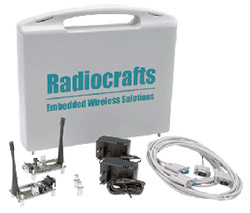
For all our Wireless M-Bus modules, easy-to-use Development Kits are available for rapid prototyping and proof of concept. The kits contain:
- Two Development Boards with the module of choice
- Onboard USB level shifter and USB connector
- SMA antenna connector, I/O break-out
- Quarterwave stub antennas with SMA connector
- USB cables
- The HP variants include additional AC/DC Power Supplies
The kit should be used together with the PC software tools.
Development Kit Software Tools
File type: |
File name: |
File description: |
|---|---|---|
 |
RC Tools-MBUS contains the PC tools for design with the Wireless M-BUS product family. It includes the CCT tool and the Demo tool. |
|
 |
To update the module configuration files used by the CCT tool, please unzip and copy these files to the “Modules” folder inside the RCTools MBUS installation folder. |
Development Kit Quick Start
File type: |
File name: |
File description: |
|---|---|---|
|
The Demonstration Kit from Radiocrafts is designed to make it easy for the user to evaluate the module, develop an application and build prototypes. Bundled with the Demonstration Kit is the RCTools PC software to be used together with the Demo Boards. |
|
|
The Demonstration Kit from Radiocrafts is designed to make it easy for the user to evaluate the module, develop an application and build prototypes. Bundled with the Demonstration Kit is the RCTools PC software to be used together with the Demo Boards. |
Development Kit User Manual
File type: |
File name: |
File description: |
|---|---|---|
|
This User Manual describes how to use the Demonstration Kit for RC11xx; RC12xx; RC2xxx module series and provides detailed documentation for the Demonstration Board. |
|
|
This User Manual describes how to use the Demonstration Kit for RC11xxHP; RC12xxHP; RC17xxHP module series and provides detailed documentation for the Demonstration Board. |
|
|
RCTools is a powerful and easy to use PC suite that helps you during test, development and deployment of the Radiocrafts modules. The RCTools includes RC_CCT, RC_SA and RC_DT stand-alone applications running under windows .Net Framework. The RCTools is free of charge and easily installed (including .NET and USB Driver) by running the setup file. |
|
|
This is s a software suite containing tool for easy module configuration and concentrator/meter emulators. The tool helps you transmit encrypted Wireless M-Bus packets, set up two-way communication, and provides a packet sniffer. |
|
|
The MBUS-CCT (Configuration & Communication Tool) helps you to work with your Radiocrafts modules. The program enables you to easily configure the module and can additionally work as a terminal window, where data can be sent or received to / from any serial port. The RSSI (Received Signal Strength Indicator) informs you about the Link budget and helps you estimate range. |
Development Kit Reference Designs
File type: |
File name: |
File description: |
|---|---|---|
|
Schematic and PCB documentation used for the RC11xx-MBUS3 and RC11xx-MPC1 development kits. This board is recommended to use as a reference design. |
|
|
Schematic and PCB documentation used for the RC11xxHP-MBUS3, RC1701HP-MBUS4, RC1701HP-WIZE and RC1701HP-MPC1 development kits. This board is recommended to use as a reference design. |
|
|
Schematic and PCB documentation used for the RC1180-MSM development kit. This board is recommended to use as a reference design. |
|
|
Schematic and PCB documentation used for the RC1701HP-MSM development kit. This board is recommended to use as a reference design. |
Radiocrafts offers a range of Wireless M-Bus PC software tools to support the evaluation and development of new applications. The tools quickly generate configuration data for specific applications and help create a fully functional wireless network.
File type: |
File name: |
File description: |
|---|---|---|
|
RC Tools-MBUS contains the PC tools for design with the Wireless M-BUS family. It includes the CCT tool and the Demo tool. |
|
|
To update the module configuration files used by the CCT tool, please unzip and copy these files to the “Modules” folder inside the RCTools MBUS installation folder. |
Explore Radiocrafts’ vast array of webinars, videos, blogs, and wireless guides to learn more about how you can benefit from using Radiocrafts’ leading Wireless M-Bus modules for your next project!
Webinars
File type: |
File name: |
File description: |
|---|---|---|
 |
In this webinar hosted by Radiocrafts and Solvimus, two leading members and contributors to the Wireless M-Bus standard, we discuss:
• The Wireless M-Bus ecosystem including the Wireless M-Bus protocol |
|
|
In this webinar you will learn about:
• An expert guide on Wireless M-Bus. |
|
|
In this webinar we are joined by Wize Alliance members, SUEZ and AllWize, to discuss:
• Who are the Wize Alliance? |
|
|
In this webinar we are joined by Wize Alliance members, SUEZ and Enless Wireless, to discuss: • Who are the Wize Alliance? • What are the benefits of the 169 MHz ISM band? • Radiocrafts Wize module offering • Wize network access and local deployments of Wize networks • Wize end products targeting different applications including building automation and smart metering |
|
|
In this webinar discuss:
• Comparison of the radio coverage of 169, 433, 868 MHz in real life installations |
|
|
In this webinar discuss:
• Understand the basics of Wireless M-Bus |
Video Snippets
File type: |
File name: |
File description: |
|---|---|---|
|
The In this snippet we discuss Radiocrafts’ world-leading Wireless M-Bus solutions such as our:
• Standard OMS Compliant Wireless M-Bus modules |
|
|
The first snippet series we will be introducing is about the Wireless M-Bus protocol. In this snippet series Radiocraft’s managing director, Peder Martin Evjen, discusses in detail a variety of interesting features related to the Wireless M-Bus protocol such as the Wireless M-Bus modes, uses, security modes, battery lifetime and more. |
|
|
The first snippet series we will be introducing is about the Wireless M-Bus protocol. In this snippet series Radiocraft’s managing director, Peder Martin Evjen, discusses in detail a variety of interesting features related to the Wireless M-Bus protocol such as the Wireless M-Bus modes, uses, security modes, battery lifetime and more. |
|
|
The first snippet series we will be introducing is about the Wireless M-Bus protocol. In this snippet series Radiocraft’s managing director, Peder Martin Evjen, discusses in detail a variety of interesting features related to the Wireless M-Bus protocol such as the Wireless M-Bus modes, uses, security modes, battery lifetime and more. |
|
|
The first snippet series we will be introducing is about the Wireless M-Bus protocol. In this snippet series Radiocraft’s managing director, Peder Martin Evjen, discusses in detail a variety of interesting features related to the Wireless M-Bus protocol such as the Wireless M-Bus modes, uses, security modes, battery lifetime and more. |
|
|
The first snippet series we will be introducing is about the Wireless M-Bus protocol. In this snippet series Radiocraft’s managing director, Peder Martin Evjen, discusses in detail a variety of interesting features related to the Wireless M-Bus protocol such as the Wireless M-Bus modes, uses, security modes, battery lifetime and more. |
Blogs
File type: |
File name: |
File description: |
|---|---|---|
In this blog post we will talk about:
• What truly matters when picking a suitable technology for your application |
||
In this blog post we will talk about:
• The Wize Alliance, a non-profit organisation that brings together large international players from the industrial and utility sectors to support the implementation of Wize |
||
In this blog post we are going to discuss:
• The different features which make the 169 MHz band ideal for sensors and devices in hard-to-reach places |
||
In this blog post we will discuss:
• The growth of Smart cities and how this is creating a need for better RF technologies with better penetration, using smart metering as an example |
Free Wireless Guides
File type: |
File name: |
File description: |
|---|---|---|
|
Selecting the right wireless technology is a critical design decision. This technology selection guide will:
• Point out the differences between the technologies to help in selecting the right one |
|
|
This White Paper aims at drawing the map over the IoT connectivity terrain and to position the Radiocrafts Industrial IP Mesh (RIIM) among the other technologies, e.g. LoRaWAN, Wi-SUN and Wirepas. The purpose is not to find one best solution, but to identify the trade-offs and priorities that the user must do when considering wireless connectivity. |
Declarations of Conformity
File type: |
File name: |
File description: |
|---|---|---|
|
RED/CE Declaration of Conformity for the RC1140-MBUS3 module |
|
|
RED/CE Declaration of Conformity for the RC1180-MBUS3, RC1180-MPC1, and RC1180-MSM modules |
|
|
RED/CE Declaration of Conformity for the RC1180HP-MBUS3 and RC1180HP-MPC1 modules |
|
|
RED/CE Declaration of Conformity for the RC1701HP-MBUS4 and RC1701HP-MSM modules |



Radiocrafts’ high performance Wireless M-Bus modules have helped our customers get fast to market in a wide variety of wireless applications!




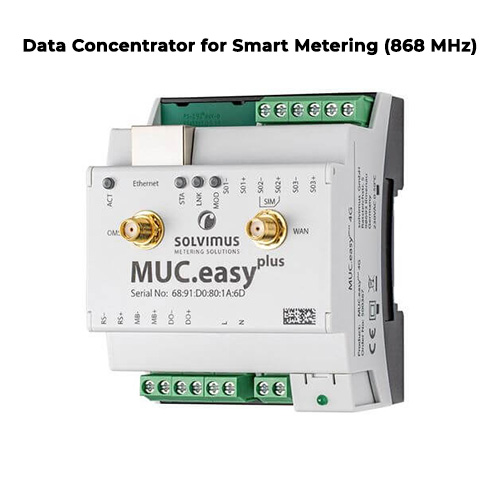
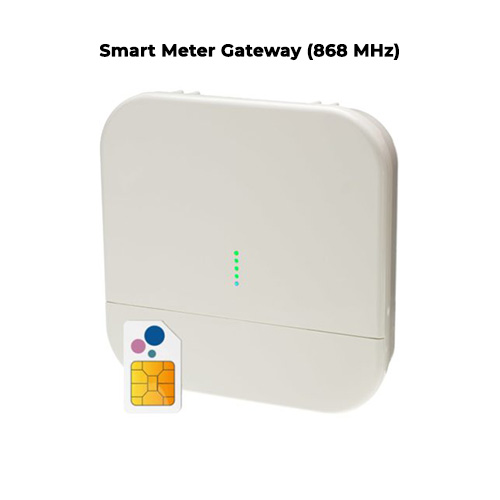
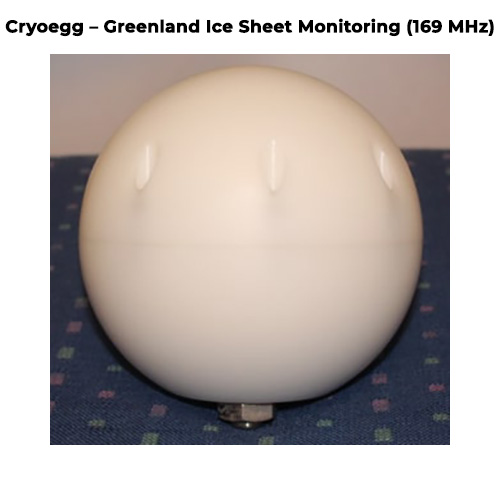
How To Buy Wireless M-Bus Modules

Buy Online From DigiKey!
Product Name | Frequency | Region Compliance | Buy Module Online | Buy Development Kit Online |
RC1140-MBUS3 | 433 MHz | OMS / Non-EU | ||
RC1160-MBUS3 | 868 MHz | OMS / Russia | ||
RC1170-MBUS3 | 865 MHz | OMS / India | ||
RC1170HP-MBUS3 | 865 MHz | OMS / India | ||
RC1180-MBUS3 | 868 MHz | OMS / EU / CE | ||
RC1180HP-MBUS3 | 868 MHz | OMS / EU / CE | ||
RC1701HP-MBUS4 | 169 MHz | EU / CE | ||
RC1701HP-WIZE | 169 MHz | EU / CE | ||
RC1140-MPC1 | 433 MHz | Non-EU | ||
RC1170-MPC1 | 865 MHz | India | ||
RC1180-MPC1 | 868 MHz | EU / CE | ||
RC1701HP-MPC1 | 169 MHz | EU / CE | ||
RC1180-MSM | 868 MHz | EU / CE |
Or Contact Radiocrafts Sales Team

Wireless M-Bus FAQ
What is Wireless M-Bus and which standard does it implement?
Wireless M-Bus (wM-Bus) is the open European standard for wireless meter reading defined in EN 13757-3 and EN 13757-4. It is the most widely deployed protocol for smart water, gas, heat-cost-allocation and electricity metering in Europe. It is supported by the Open Metering System (OMS) specification and its security and key-management profiles.
Which Wireless M-Bus modes does Radiocrafts support?
Radiocrafts modules support the main wM-Bus modes:
- S (stationary)
- T (frequent transmit)
- C (compact)
- N (narrowband 169 MHz)
- F
The same module can typically be configured for multiple modes, and the embedded stack handles framing, encryption and air-side scheduling automatically.
What is Wize and how does it relate to Wireless M-Bus?
Wize is a 169 MHz IIoT technology built on the Wireless M-Bus N-mode. It is designed for very long range, deep building penetration and long battery life. The technology was founded by the Wize Alliance and is widely used for hard-to-reach metering deployments, such as water meters in basements or pits.
What frequency bands are used by Wireless M-Bus and Wize?
European Wireless M-Bus operates at 868 MHz for the S, T and C modes. The N-mode and Wize variant operate at 169 MHz, providing strong object penetration and long range for hard-to-reach meters. Modules are pre-certified for the relevant CE/RED requirements.
How does Wireless M-Bus compare to mioty for smart metering?
Wireless M-Bus is the established European meter-reading standard, with millions of devices deployed and a mature utility and concentrator ecosystem.
mioty is a newer LPWAN designed for massive scale and interference resilience. It is well suited to very high node counts and difficult RF conditions.
Radiocrafts helps our customers pick the best option based on device density, range and existing infrastructure.
Are Radiocrafts' Wireless M-Bus modules pre-certified?
Yes. Every module is shipped with CE/RED and country-specific approvals for the bands it operates on, plus a signed Declaration of Conformity available for download. This removes the most expensive part of bringing a metering product to market.
What battery life can I expect on a Wireless M-Bus meter?
A typical water or heat meter sending one to four telegrams per day routinely runs 12 to 15 years or more on a primary lithium battery.
Actual life depends on transmission interval, payload size, mode and battery chemistry.
How do I integrate a Wireless M-Bus module with my existing meter?
The simplest path is the M-Bus Sensor Interfacing Module (MSM) family. The MSM integrates the full Wireless M-Bus stack and exposes a UART, SPI or GPIO interface. The customer’s MCU sends meter readings over the interface, and the module handles framing, AES-128 encryption, OMS-compliant key handling and air-side scheduling.