
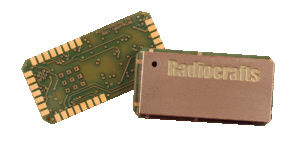

Radiocrafts Industrial IP Mesh (RIIM) is a wireless long range mesh network for low-power sub-GHz connectivity. It was designed to easily connect sensors and industrial devices directly to the cloud through an ultra-reliable and scalable network.
By combining a wireless long range mesh network, IP communication, and long battery life, RIIM reduces installation complexity, lowers maintenance costs, and reliably enables large-scale IoT deployments with hundreds to thousands of devices.

Short Development Time – Everything is included in the module

Long range and massive area coverage – 40 x 40 km² (25 x 25 mi²)

Ultra-reliable data transmissions – 99.99% +

High-throughput networking for high data requirements

Ultra-low power for battery operated devices

Interface to any sensor or controller

Future-proof with Over-The-Air updates

Global Solution – FCC/CE certified – 865/868/915 MHz supported
How it works
The RIIM module includes all the critical components for a complete wireless long range mesh network. As a result, RIIM is ready to go out-of-the-box without the need to pay license or subscription fees.
As a self-forming, self-healing, and self-optimizing mesh solution, RIIM creates a network structure that connects all devices fully automatically to the gateway without user interference. Once the long range mesh network is established, the connectivity is constantly monitored for changes. If a device disappears or a new device appears, then the network will re-route itself to accommodate the change. This drastically reduces maintenance costs and installation complexities.
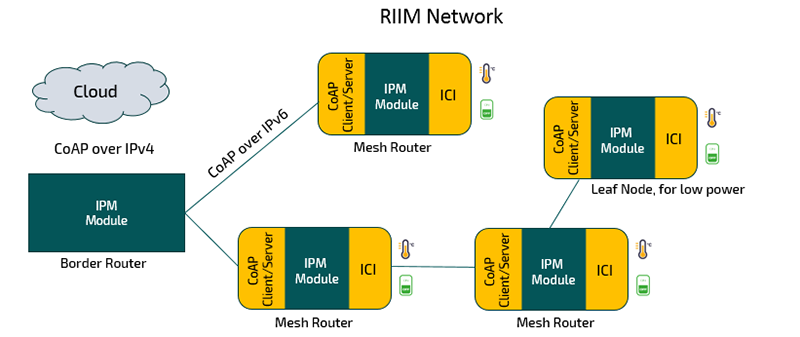
In addition, each RIIM device acts as network infrastructure, routing data across multiple devices. Data then reaches a gateway connected to a cloud or local control system. This long range mesh network architecture allows installations to cover enormous areas while maintaining ultra-reliable communication. This includes hard-to-reach environments with obstacles or challenging radio conditions.
Scaling with reliability is the cornerstone of RIIM.
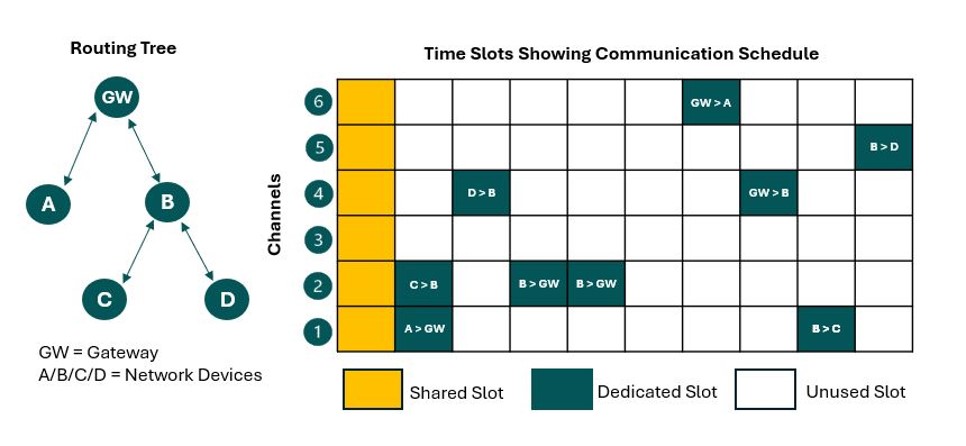
RIIM uses mechanisms called Time-Synchronized Channel Hopping (TSCH) and Adaptive Frequency Agility (AFA) to achieve 99.99%+ data transmission success. This performance is maintained even in large networks with thousands of devices.
TSCH and AFA work in tandem by sending data transmissions at several frequencies and different timeslots in a synchronized schedule. All radio channels are continuously scanned, and those with high interference are identified and removed from the frequency hopping list. This means that RIIM only sends data on the radio channels with the least amount of noise, drastically reducing interference and ensuring stable and predictable data transmissions.

RIIM is also optimized for applications which have high data capacity requirements. RIIM supports high data throughput networking to handle more data, devices, and frequent communication without compromising reliability or battery life. This enables real-time control of advanced IoT applications such as sub-metering and solar tracking while still maintaining the long range and low power consumption required for large-scale deployments.
For companies deploying IoT and monitoring solutions, RIIM simplifies the process of building large long range mesh networks. It reduces cabling needs, minimizes infrastructure requirements, and lowers installation and maintenance costs. In addition, low power consumption enables long battery life for wireless devices. The scalable long range mesh network architecture allows systems to expand over time without major redesign.
This makes RIIM a flexible, future-proof connectivity solution for applications requiring reliable long range wireless communication.
RIIM module benefits and features include:
- Short development time – Everything is included in the module
- Long range and massive area coverage – 40 x 40 km² (25 x 25 mi²)
- Ultra-reliable data transmissions – 99.99% +
- High-throughput networking for high data requirements – 50 / 150 kbps
- Ultra-low power for battery operated devices
- Interface to any sensor or controller
- Future-proof with Over-The-Air updates
- Global Solution – FCC/CE certified – 865/868/915 MHz supported
- Network-wide and local multicast for remote management
- Automatic long range mesh network setup: Self-forming, self-healing, self-optimizing
- Up to 1000 nodes per network
- CoAP interface to the cloud for simplified integration with the web to make RIIM internet ready
- IPv4 and IPv6 communication making RIIM directly compatible with most cloud services
- Time synchronized nodes for exact start and stop times for specific events
- Industrial grade quality to meet the strict reliability standards of industrial applications
- Advanced security – encryption and pre-shared keys
- Edge computing supported to reduce network bandwidth and power consumption
- Ultra-low latency for instant control of network events
- Compact shielded module 12.7 x 25.4 x 3.3 mm for SMD mounting
- CE and FCC pre-certified modules for fast to market release
RIIM FAQ
What range and scalability can I expect from a RIIM mesh network?
A single hop reaches up to roughly 1.5 km outdoors line-of-sight.
A packet can hop up to 28 times across the mesh, so a single network can cover up to 40 by 40 km² utility-scale deployments or roughly 5.6 km² in dense urban environments.
Indoors, RIIM typically delivers 150 to 250 m between devices even through reinforced concrete.
How many devices can a single RIIM network support?
Up to 1,000 devices per gateway (border router) on standard RIIM.
To cover larger areas or higher node densities, additional border routers can be added.
Which frequencies does RIIM operate on, and is it globally supported?
RIIM supports 865 MHz (India), 868 MHz (EU/RED) and 915 MHz (US/FCC, plus several Americas and APAC bands).
Application Note AN056 (“Global Support For RIIM“) gives the country-by-country regulatory status. In supported regions, the RF modules are shipped with the relevant pre-certifications, so no further radio testing is required for normal use.
Does RIIM support Modbus, IPv6, CoAP, MQTT and direct cloud connectivity?
Yes. RIIM speaks IPv6 natively, with built-in support for UDP, CoAP and DTLS for end-to-end encrypted cloud connections. Modbus RTU traffic is transported transparently using the wireless-Modbus extension (Application Note AN053). MQTT integration is straightforward via the gateway, and example code for SLIP, IPv6 routing and Modbus is published on the Radiocrafts GitHub.
This works by making the nodes re-transmit the broadcasted message from the Border Router and giving each broadcast message a MFN (Multicast Frame Number). If device “A” has received up to MFN #26 from Border Router and another has received MFN #27, then nodes detect this and the MFN #27 is sent to the device that did not have this from before.
If the Border Router absolutely requires an Acknowledgment from the nodes, then we suggest implementing a random timer which triggers the Acknowledgment from each node. This way, Acknowledgements will be sent at different times and congestion would be minimized.
How reliable is data delivery on RIIM?
Time-Synchronised Channel Hopping (TSCH) and Adaptive Frequency Agility (AFA) deliver a proven packet-delivery rate of 99.99% even in noisy industrial environments.
AFA also raises the allowed duty cycle in Europe up to 40%, supporting heavy traffic applications such as inverter monitoring or frequent solar tracker telemetry.
Does RIIM support over-the-air firmware updates?
Yes. RIIM supports two-way communication and Over-the-Air firmware updates. Devices in hard-to-reach locations such as rooftops, underground vaults or solar fields can be updated remotely once deployed. New nodes can also join an existing network without a manual configuration step.
What development hardware do I need to start a RIIM proof of concept?
The RIIM Development Kit includes development boards with RIIM modules, antennas, battery holders and USB cables. The kit is shipped with an example application that brings up a working mesh in under an hour.
You can buy directly from Radiocrafts, via Digi-Key or directly from Radiocrafts!
Tutorial videos for the kit are available in the Webinars and Video Snippets section of the website.
Radiocrafts has high performance RIIM modules designed for long range, low latency, low power control applications. These modules will ensure the flexibility to choose between different frequency bands for a truly global solution, save you a lot of R&D investment, will take you fast to market, and are proven in quality with numerous installations worldwide.
RC18xxxx-IPM module series
High performance RIIM modules designed for long range, low latency, low power control applications.
Module | Frequency Band (MHz) | Radio Channels # | Data Rate (kbps) | Rx Sensitivity (mA) | Rx Current (mA) | Power Output (dBm) | Tx Current (mA) | Sleep Current (uA) | Indicative LoS (M) | Region / Compliance |
RC1882CEF-IPM | 862 - 930 | 83 | 5 / 50 / 150 | -110 | 6 | 14 | 25 | 2.70 | 5,000 | Worldwide* |
RC1882HPCF-IPM | 865 - 870 | 33 | 5 / 50 / 150 | -111 | 12.50 | 27 | 350 | 3.5 | 20,000 | EU / CE / India |
RC1892HPCF-IPM | 902 - 928 | 50 | 5 / 50 / 150 | -111 | 12.50 | 27 | 350 | 3.5 | 20,000 | USA / FCC |
Datasheets
File type: |
File name: |
File description: |
|---|---|---|
 |
This document covers the relevant information for the RC1882CEF-IPM module. You will find a description of the RIIM overview, firmware structure, the ICI programming concept, pin assignment and description, regulatory compliance information, mechanical drawings, PCB layout recommendations, and more. |
|
|
This document covers the relevant information for the RC1882HPCF-IPM and RC1892HPCF-IPM modules. You will find a description of the RIIM overview, firmware structure, the ICI programming concept, pin assignment and description, regulatory compliance information, mechanical drawings, PCB layout recommendations, and more. |
|
|
This is a web-based (Online) Document Library for RIIM, Radiocrafts’ long range mesh network. In this web-based document library you can find an introduction to RIIM, User Manuals, Quick Start Guides, benefits and features of RIIM, technical information on RIIM, an FAQ for RIIM, and much more. |
User Manuals
File type: |
File name: |
File description: |
|---|---|---|
|
This is a web-based (Online) Document Library for RIIM, Radiocrafts’ long range mesh network. In this web-based document library you can find an introduction to RIIM, User Manuals, Quick Start Guides, benefits and features of RIIM, technical information on RIIM, an FAQ for RIIM, and much more. |
|
|
The RIIM Network Dashboard is a tool to check the network topology and status of the connections between the nodes in your RIIM long range mesh network. It provides the RSSI value and time-stamp for each connection in the network. |
Application Notes
File type: |
File name: |
File description: |
|---|---|---|
|
Understanding and implementing wireless communication across vast industrial environments is foundational for any company looking to effectively participate in a RIIM network using IPv6 over SLIP. This document provides the necessary context and knowledge to navigate the complexities of industrial mesh networking, paving the way for seamless integration and communication within this advanced technological framework. |
|
|
In this application note we address some of the use cases and challenges of using a wireless mesh network in a solar field. We show how good a fit RIIM is for these applications, for example, RIIM handles large networks, is a superb solution for mitigating interference, fits well in an efficient commissioning strategy, handles data traffic both uplink and downlink with more throughput and higher reliability than other competing technologies, and more! |
|
|
There are a lot of features supported by the GPIO ports in RIIM. In this Application Note we show examples of how we solve some common problems, including use of common functions like Interrupts and PWM. |
|
|
When designing the PCB layout for the RF modules, there are some measures that need to be taken to get the best performance from the radio module. In this application note, we will suggest some best practices for your product to succeed. |
|
|
This application note describes what needs to be done to achieve the lowest possible power consumption and which choices can be made when it comes to performance vs power consumption. |
|
|
This document aims to give you a basic overview of commissioning processes in general, such as network formation, service discovery, and device discovery. Furthermore, the document also aims to shed more light on how RIIM handles different aspects of commissioning and what processes Radiocrafts suggests for different commissioning aspects. |
|
|
This document briefly introduces the new Battery Lifetime Estimator tool, created by Radiocrafts, to help customers understand the long range mesh network parameters that affect power consumption in RIIM. Furthermore, we give you a brief explanation of said major parameters and how to tune them to get optimal battery lifetime for your application. |
|
|
This document describes the various radio regulations in various parts of the world which are supported by RIIM. Lastly, the document also presents how to correctly implement these settings in RIIM to be used with each set of regulations. |
|
|
To serve diverse use cases, RIIM offers a variety of settings to suit the requirements of each use case. The user can choose either single channel or TSCH mode, and in TSCH the user can still tweak the settings to fit their application on a finer level. The simulation results presented give a realistic example of what kind of performance you can expect out of your long range mesh network, along with some design guidelines which ensure the best and most reliable operation. |
|
|
This document presents several methods on how you can Debug your RIIM code by one or a combination of the methods mentioned. |
|
|
In this document we will go through some of the most common serial connections available between nodes in industrial control networks. Afterwards, we will present how Radiocrafts RC232 and RIIM enable the wireless extension of some fieldbuses based on Modbus protocol by supporting the RS232 and the RS485 electrical standard on RF modules. |
|
|
This paper discusses the most common security challenges in a long range mesh network, and how RIIM addresses them in a way that provides strong security, while maintaining the crucial features of a low power wireless mesh network. |
|
|
This document starts with an introduction to RIIM and the benefits of using Time-Synzhronized Channel-Hopping (TSCH) which is an essential mechanism to support the Polite Spectrum Access technique. Then we go into detail on how the Polite Spectrum Access technique supports your long range mesh network with higher reliability and high data throughput. |
|
|
RIIM is commonly used in smart applications involving a fair amount of control. Such applications often require the implementation of synchronized events. Time synchronization in a long range mesh network is crucial for managing the exact start and stop times of certain events. In this document, we example how RIIM supports time synchronization including the advantages the user can benefit from when using it. |
|
|
In this document, we explain one of the methods to achieving Border Router redundancy. In addition, we show you exactly how to implement it in your code. |
|
|
RIIM has been natively designed to enable cloud connection using IPv6 addressing. There are several ways to connect to the cloud, each with their own pros and cons. For end to end IPv6 connection between end devices/sensors and the cloud, SLIP must be used. This application note goes into detail on how to setup and use the SLIP solution. |
|
|
This document aims to briefly break down 4 of the most commonly used internet connectivity options for RIIM, presenting each option’s building blocks, in addition to its pros and cons. |
|
|
Different applications and different use-cases will need different wireless connectivity technologies. Therefore, selecting the right wireless technology is a critical design decision. Based on radio performance requirements and other criteria, this selection guide will point out the differences between the technologies to help selecting the right one. |
|
|
This is a short Application Note on the use of license free RF modules in New Zealand, and in particular which modules from Radiocrafts will meet the local radio regulations. |
|
|
This application note aims to show how RIIM, supported by Time-Synchronized Channel Hopping (TSCH), enables battery-operated Mesh Routers. The document is organized as follows; Firstly, we present the key benefits of using battery-operated Mesh Routers. Then, TSCH is explained, along with how it enables Sleep Mode in Mesh Routers, thus enabling battery-operated Mesh Routers. Later, we share some of the important design guidelines to help users tune key parameters in their RIIM network to suit their specific use-case. Lastly, we demonstrate performance results of battery-operated Mesh Routers. |
|
|
This application note examines operating RIIM as a wireless transparent UART channel. The transparent mode of the network is enabled by uploading a specific ICI application (customer application) to the module. The “Transparent Mode Application” is available to download as part of the RIIM SDK (software development kit). It is distributed as open source, and hence making adjustments and enhancements is very easy. |
|
|
This application note demonstrates how to perform the measurements needed to verify the power consumption of RIIM Leaf Nodes operating in Sleep mode. Sleep mode allows the Leaf Node to cease all radio communications and go into a deep sleep state, reducing power consumption significantly. |
|
|
This application note demonstrates how RIIM can be optimized for street lighting applications. We start with a short introduction about street lighting and an in-depth examination of one of the possible application scenarios. Then, after a quick re-cap about RIIM, we present simulation results we ran which clarify how RIIM behaves in the use-case under examination and how such a long range mesh network is expected to perform. |
|
|
The RIIM long range mesh network can be extended with an edge gateway and then have external cloud connection from the gateway device. In this application note, we will discuss what an edge gateway is and how to it can be implemented in the RIIM network. |
|
|
Radiocrafts investigated the performance of RIIM in a real building. The test setup consisted of 15 nodes that were distributed and deployed in the Radiocrafts office building, which is 6-story tall, 100-meter long concrete building in Oslo. This application note presents the network setup and the results measured from such a long range mesh network. |
|
|
Learn everything you need to know about understanding range from Line-of-Sight considerations to antenna design and more. Also read about the impressive RIIM range measurements conducted by Radiocrafts both in urban and LoS areas in Norway. |
|
|
This application note demonstrates how to setup a RIIM long range mesh network and how to integrate it with an easy-to-use IoT cloud service provider. The RIIM network used in this example will consist of a sensor board and a border router board. |
|
|
This application note demonstrates how easy it is to create your own application using Radiocrafts’ ICI (intelligent C-programmable I/O). ICI is a framework that allows users to format and process data in the RIIM RF modules. ICI has access to resources such as the processing engine, the digital and RF interface, timers and memory. |
|
|
There are many different wireless standards and technologies available to enable the internet of things (IoT). The different technologies have different pro’s and con’s depending on the use case and the end customer. Trying to keep up with the latest wireless trends can drain a company of all its resources and take attention from its core business. The solution recommended by Radiocrafts is to use a modular approach and a common RF module footprint that enables all the technologies offered by Radiocrafts without modifications to the PCB. |
|
|
When selecting the right radio technology, the achievable communication range is an important factor. This document review how to analyse radio range based on parameter provided in the data sheets for the different module families. Some measurement results from practical range testing are also shown |
|
|
The purpose of this document is to list some of the most common issues that customers report when using Radiocrafts modules, and the solution to these issues. |
White Papers
File type: |
File name: |
File description: |
|---|---|---|
|
RIIM and Wi-SUN are both sub-GHz mesh protocols for long range communication. Wi-SUN is a standard developed and maintained by the WI-SUN alliance, while RIIM is protocol developed by Radiocrafts. The two technologies share many properties, while they also have some key differences. The reason for the key differences is the use cases for which they are designed. In this White Paper we go into details on the key differences and similarities. |
|
|
In this whitepaper we will outline some parts of the required process needed for a product to be accepted in the market with one of our modules inside. The paper will not cover every license type in every country but will instead give an overview of the certifications needed and how to test against this. |
|
|
RIIM is designed to provide an industrial grade long range mesh network catering to a large variety of IoT use cases. One of these use cases is critical IoT applications. Such applications require high network reliability. This means the network must ensure very high packet success rates and must also ensure network availability at all times. To best tackle this, RIIM offers multiple layers of reliability over much of its stack including TSCH, mesh structure, and more. |
|
|
This White Paper aims at drawing the map over the IoT connectivity terrain and to position the Radiocrafts Industrial IP Mesh (RIIM) among the other technologies, e.g. LoRaWAN, Wi-SUN and Wirepas. The purpose is not to find one best solution, but to identify the trade-offs and priorities that the user must do when considering wireless connectivity. We map technical features such as current consumption, range, firmware upgrade over air, reliability etc. |
|
|
An efficient and reliable street lighting network is a key enabler in any smart city design. A smart street lighting network is a large-scale network which incorporates a variety of monitoring devices, such as sensors or even cameras, which serves to make the city more safe, smart, and sustainable. In this document we present how RIIM offers an optimized solution for Street Lighting. |
|
|
Radiocrafts has developed an IP based wireless long range mesh network to enable end-to-end IP communication between IoT devices and the Cloud. We call this solution RIIM, Radiocrafts Industrial IP Mesh. This document discusses the background for why RIIM was developed and the benefits of an long range mesh network solution which provides a commercially attractive solution for companies. |
|
|
The new RED (Radio Equipment Directive, 2014/53/EU) is replacing the R&TTE Directive (1999/5/EC), and comes into full force from 2017-06-13. This document describes the main changes in the new directive, information about assessment and Declaration of Conformity, end user responsibilities, etc. |
|
|
This document covers the relevant information about the different antenna types, their selection criteria and matching, positioning, and selection guide based on different frequencies. |
For all our RIIM modules, easy-to-use Development Kits are available for rapid prototyping and proof of concept. The kits contain:
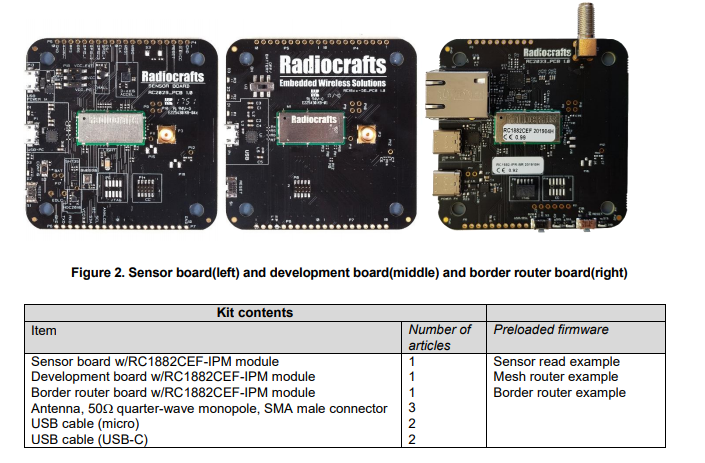
- Sensor Board with embedded RIIM module and 7 industrial sensors
- Development Board (Mesh Router Board) with embedded RIIM module
- Border Router Board with embedded RIIM module
- SMA antenna connector, I/O break-out
- Quarterwave stub antennas with SMA connector
- USB cables
- The HP variants include additional AC/DC Power Supplies
The kit should be used together with the PC software tools.
Development Kit Software Tools
File type: |
File name: |
File description: |
|---|---|---|
 |
RIIM SDK, the software development kit to build custom applications on IPM modules. |
|
|
The RIIM Network Dashboard is a tool to check the network topology and status of the connections between the nodes in the RIIM network. It provides the RSSI value and time-stamp for each connection in the network. |
|
|
Through extensive experience and feedback in supporting customers using our IP mesh module, RIIM, Radiocrafts has created a GitHub page. This page is populated with a library of application and feature specific sample codes for quick and easy module testing and product prototyping/Proof of Concepts. |
Development Kit Quick Start
File type: |
File name: |
File description: |
|---|---|---|
|
RIIM Quick start guide to help the reader through installation and setup of the RIIM SDK and through the process of compiling and downloading a pre-made application in the SDK. |
|
|
This document describes various application examples you can realise using the RIIM SDK. |
Development Kit User Manual
File type: |
File name: |
File description: |
|---|---|---|
|
This User Manual describes how to use the Development Kit for RIIM modules. |
Development Kit Reference Design
File type: |
File name: |
File description: |
|---|---|---|
|
This is the second revision of the Sensor Board. Schematic and PCB documentation used for our development kits. This board is recommended to use as a reference design. |
|
|
Schematic and PCB documentation used for the development board. This board is recommended to use as a reference design. |
|
|
Schematic and PCB documentation used for our development kits. This board is recommended to use as a reference design. |
Radiocrafts offers the RIIM SDK to support in the evaluation and development of new applications. The SDK provides a fast way to create the data needed to create a fully functional wireless network, configured specifically for your application.
File type: |
File name: |
File description: |
|---|---|---|
|
RIIM SDK, the software development kit to build custom applications on IPM modules. |
|
|
The RIIM Network Dashboard is a tool to check the network topology and status of the connections between the nodes in the RIIM network. It provides the RSSI value and time-stamp for each connection in the network. |
|
|
Through extensive experience and feedback in supporting customers using our long range mesh network, RIIM, Radiocrafts has created a GitHub page. This page is populated with a library of application and feature specific sample codes for quick and easy module testing and product prototyping/Proof of Concepts. |
Explore Radiocrafts’ vast array of webinars, videos, blogs, and wireless guides to learn more about how you can benefit from using Radiocrafts’ long range mesh network, RIIM.
Webinars
File type: |
File name: |
File description: |
|---|---|---|
 |
In this webinar we will discuss:
• RIIM’s ultra-low power consumption enabling devices to operate 15 years on 2xAA batteries. |
|
|
In this webinar we will discuss:
• Approvals with large reach: FCC and CE |
|
|
In this webinar we will discuss:
• What the solar industry will look like in the future. |
|
|
In this webinar you will learn about: • IPv4, IPv6 and how they affect your connectivity options • Using NAT64 to connect your RIIM network to the cloud • Benefits of using SLIP to provide IPv6 addressing all the way • CoAP vs. MQTT for cloud connectivity |
|
|
In this webinar you will learn about:
• Effortless integration with PLC through MQTT |
|
|
In this webinar we will answer questions about:
• The most suitable applications for RIIM. |
|
|
In this webinar you will learn about:
• Technology Comparisons: RIIM, LoRaWAN, BLE, MIOTY, Wireless M-Bus, RC232, and more. |
|
|
In this webinar you will learn about:
• Which of RIIM’s superpowers are the most relevant for your application? |
|
|
In this webinar you will learn about:
• Debugging options with ICI |
|
|
In this webinar you will learn about:
• Overview of Wireless IoT enablers: RIIM, LoRaWAN, Wi-Sun, and Wirepas. |
|
|
In this webinar you will learn about: • Key features for creating modern smart street lighting systems • What new features make RIIM a unique enabler for smart street lighting solutions • Enabling Real-time Adaptive Lighting for maximum energy saving & safety |
|
|
In this webinar we discuss: • Full support for battery-operated mesh routers • Support for high duty cycling in Europe • Time-Synchronization in RIIM • Support for local sensor multicast |
|
|
In this webinar we discuss: • Why Smart irrigation is important. • Radiocrafts’ 169 MHz solutions for hard-to-reach smart irrigation installations. • The common challenges in smart irrigation systems. • RIIM in Smart Irrigation: Technical Advantages. • RIIM: Precision control for precision agriculture. |
|
|
You will learn about battery-operated mesh networking with RIIM, including:
• Mesh Routers with more than 4 years of battery lifetime |
|
|
In this webinar you will:
• Learn about why Sub-1 GHz long range mesh network solutions are optimized for street lighting. |
|
|
In this webinar we share how to achieve the lowest possible power consumption with RIIM |
|
|
In this webinar we share how to create an IP mesh network with Radiocrafts RIIM solution |
|
|
In this webinar we share how to connect your RIIM long range mesh network from the cloud to any sensor. |
|
|
In this webinar we share how to achieve lower latency in your network when working with Radiocrafts’ RIIM and RIIoT modules. |
Video Snippets
File type: |
File name: |
File description: |
|---|---|---|
|
In this video we demonstrate the importance of having low latency data communication for a solar tracker installation when it comes to safety critical events like strong winds during a storm.
The wind sensor demo shows how Radiocrafts’ long range mesh network, RIIM, can move solar panels into safe/stow position within 1 second of detecting strong wind. This is a game-changer for the solar tracker market as all other technologies available in the market today can only achieve the same result with 30 seconds to 1 minute of delay. |
|
|
In this video we showcase the long range capabilities of the Radiocrafts Wireless Mesh Modbus Extender, aka, DIN Rail device. The Modbus Extender achieves reliable connections between 3 devices covering 5 floors within a shopping mall, including in the underground parking lot where there the walls and floor is made of reinforced concrete.
In addition, this video only shows a small taste of what is possible. You can scale this outcome to up to 700 devices to cover an entire skyscraper, university campus, or massive airport for example. |
|
|
In this video we show you a step by step setup and installation guide for Radiocrafts’ Wireless Mesh Modbus Extender. |
|
|
At the Irrigation Show we performed a range test for both the LumenRadio MiraMesh and Radiocrafts RIIM Mesh solutions to showcase their exceptional long range capabilities including in indoor environments where there is plenty of interference from other radio solutions.
Both these solutions are optimised for Smart Irrigation applications requiring long range, low battery lifetime, high reliability, and the possibility to scale to hundreds of devices in a single network! |
|
|
In this demo video, we show you the immense coverage a Sub-GHz long range mesh network like RIIM can achieve with only a single gateway point using sector antennas to partition a large irrigation field, solar farm, or any other application that requires massive coverage. |
|
|
In this video snippet we take you through how to install and set-up the RIIM SDK in an easy step-by-step tutorial.
We walk you through the RIIM User Manual including the tools you have to download, where to download them, and how to get your first application up and running using the RIIM SDK. This video is especially useful for customers who have bought a RIIM Development Kit or samples and are using the RIIM SDK for the first time! |
|
|
Radiocrafts visited one of our top-tier solar tracker customers to assist in commissioning their large scale installation. The results we will share with you now showcase why our long range mesh network, RIIM, is the optimal wireless technology for solar tracking among other applications as well. |
|
|
The Evaluation Kit takes full advantage of Sub-GHz mesh to provide long range, low latency, and unmatched reliability for ultra-low power battery operated devices in both professional and residential segments!
The PC will show how the devices are connected, the signal strength, and the round-trip latency when communicating with the Irrigation Controller. |
|
|
In this video snippet we show you a demo how Radiocrafts’ RIIM radio performs in the field.
The demonstration was done in an urban environment in Oslo and demonstrates the long range, low latency, and low power capabilities of RIIM, making it an ideal solution for Smart Irrigation. |
|
|
In this video snippet we walk you through the RIIM SDK, showing all the APIs, example codes available, the different RIIM board platforms, and finally, we teach you how to upload these different platforms to the RIIM module. |
|
|
Radiocrafts just released a demo showing the latest upgrades to our long range mesh network, RIIM, demonstrating high throughput networking with the 150 kbps mode.
Running RIIM at 150 kbps while trying to send as much data as possible through the link, we achieve an average of 42 packets per second! |
|
|
In this video snippet we show you how to achieve the lowest possible power consumption using RIIM and which choices that can be made when it comes to performance versus power consumption! |
|
|
In this Demo, we show you how Radiocrafts’ long range mesh network, RIIM, is able to support super low power of 60 uA while maintaining minimal delay. |
|
|
You can use Microsoft Visual Studio Code to work with the RIIM SDK which includes automatic build and upload functions! This makes it easier to work with the RIIM SDK for users who have little to no experience in working with makefiles, scripts, etc. |
|
|
Radiocrafts supports Time Synchronization in our long range mesh network, RIIM!
This video snippet is a demo we have run to show the Time Synchronization feature! We first power up the mesh routers and border router. As the mesh routers try to connect to the border router, we see them start to synchronize the timing of their transmissions! Time Synchronization is an essential feature for many applications such as street lighting, where you need to turn off/on a group of street lights at the exact same time with no delays. |
|
|
We are introducing a new game-changing feature to our long range mesh network, RIIM. The feature is called Adaptive Frequency Agility (AFA)!
Adaptive Frequency Agility allows for high data throughput networking by taking the allowed duty cycle in Europe from 1% to around 37%. To use RIIM as an example, you can now go from 1 packet reaching the Border Router every 4 seconds to 37 packets every 4 seconds! This is a game-changer for applications that require higher throughput such as street lighting or smart irrigation! |
|
|
This is a 5-part series:
Part 1: How To Setup A RIIM Development Kit In Part 5 we teach you how to setup the cloud environment. We show you how to create an asset, a device, and a dashboard to be able to view your sensor data in the cloud service. Then we explain how to setup the ICI application which forwards sensor data from the RIIM network to the cloud. |
|
|
This is a 5-part series:
Part 1: How To Setup A RIIM Development Kit In Part 4 we show you how to configure and install a RIIM long range mesh network using different PAN IDs. We start by having three nodes connected to the same network and we observe this on the RIIM Dashboard. We then change the PAN ID of only the Border Router and observe the loss of connection on the RIIM dashboard. Finally, we set the same PAN ID to the mesh router and leaf node and observe on the dashboard that the connection between the three nodes is restored. |
|
|
This is a 5-part series:
Part 1: How To Setup A RIIM Development Kit In Part 3 we teach you how to modify the ICI example applications included in the SDK to create your own ICI application. We start off by describing the different functions in the ICI application code and what happens if you edit the functions. We then make some changes to the code to read temperature and humidity sensor readings from the board router every 1 second as opposed to the default accelerometer data every 10 second. We then demonstrate how to manually and automatically compile and upload your newly created ICI application to the modules on the boards to show that the network is actually up and running. |
|
|
This is a 5-part series:
Part 1: How To Setup A RIIM Development Kit In Part 2 we teach you how to configure a RIIM network node using three ICI applications that are provided by Radiocrafts in the RIIM SDK. We start off by describing the various contents of the SDK and how to download the tools required to use the SDK. We then proceed to compile and upload one of the ICI example applications provided in the SDK to the RIIM module on the boards. |
|
|
This is a 5-part series:
Part 1: How To Setup A RIIM Development Kit Part 1 we teach you how to setup a RIIM development kit from scratch! We describe the contents of the development kit and then proceed to show you how to setup a simple RIIM network using the pre-programmed ICI applications on the RIIM modules located on the boards. |
Blogs
File type: |
File name: |
File description: |
|---|---|---|
In this blog post we will talk about:
• What solar tracking actually means and the benefits it provides to a solar installation |
||
In this blog post we will talk about:
• What does the solar industry actually entail? |
||
In this blog post we will talk about:
• What an efficient smart street lighting system looks like |
||
In this blog post we will talk about:
• What a Building Energy Management System (BEMS) actually is |
||
In this blog post we will talk about:
• What the drivers are in the smart irrigation market |
||
In this blog post we will talk about:
• The key considerations companies need to consider for an efficient wireless large-scale solar tracker installation. |
||
In this blog post we will talk about:
• The two ways (Unicast and Multicast) in which a collective message can be sent to all devices in the network |
||
In this blog post we will talk about:
• Examples where the time synchronization feature in RIIM can benefit your application |
||
In this blog post we will talk about:
• What a mesh network actually is |
||
In this blog post we will talk about:
• What IPv6 actually is |
||
In this blog post we will talk about:
• An introduction to the “cloud” and “cloud development” |
||
In this blog post we will talk about:
• An overview on wireless mesh networks (WMN) |
||
In this blog post we will talk about:
• What truly matters when picking a suitable technology for your application |
Free Wireless Guides
File type: |
File name: |
File description: |
|---|---|---|
|
In this technology selection guide for Sub-Metering we will:
• Explain why you should go wireless and not wired |
|
|
In this technology selection guide for Solar Tracking we will:
• Explain why you should go wireless and not wired |
|
|
Drawing the map over the IoT connectivity terrain and to position Radiocrafts’ long range mesh network, RIIM, among the other technologies, e.g. LoRaWAN, Wi-SUN and Wirepas. The purpose is not to find one best solution, but to identify the trade-offs and priorities that the user must do when considering wireless connectivity. |
|
|
Selecting the right wireless technology is a critical design decision. This technology selection guide will:
• Point out the differences between the technologies to help in selecting the right one |
Declarations of Conformity
File type: |
File name: |
File description: |
|---|---|---|
|
RED/CE Declaration of Conformity for the RC1882CEF-IPM module |
|
|
FCC Declaration of Conformity for the RC1882CEF-IPM module |
|
|
FCC Declaration of Conformity for the RC1892HPCF-IPM module |



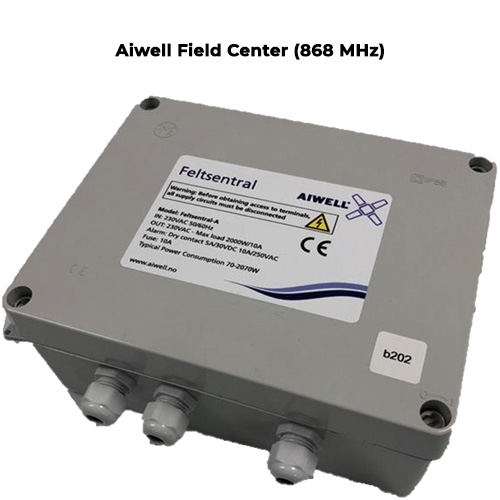
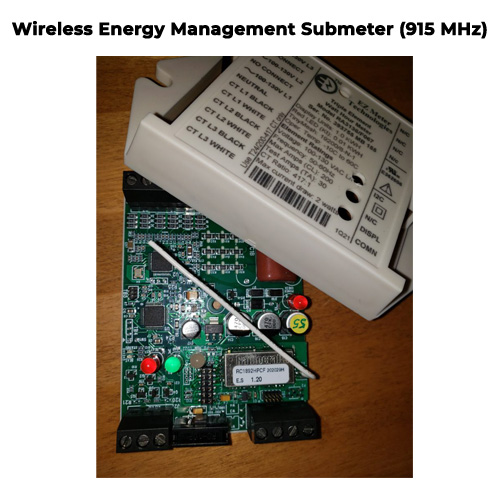
Radiocrafts’ long range mesh network, RIIM, has helped our customers get fast to market in a wide variety of wireless applications!



How To Buy RIIM Modules

Buy Online From DigiKey!
Product Name | Frequency | Region Compliance | Buy Module Online | Buy Development Kit Online |
RC1882CEF-IPM | 868 MHz | Worldwide* | ||
RC1882HPCF-IPM | 865 - 870 MHz | EU / CE / India | ||
RC1892HPCF-IPM | 902 - 928 MHz | USA / FCC |
Or Contact Radiocrafts Sales Team